
Cosmology & astrophysics
Postdoctoral Researcher
University of Manchester · Jodrell Bank
I connect physical models with cosmic observations, through theory, computation and inference.
Research
Four connected directions
Choose a research direction to explore related work.
Radio cosmology
I use the 21-cm line of neutral hydrogen to study cosmic history, from maps of large-scale structure to RHINO's measurement of the sky-averaged signal.
-
RHINO
A global 21-cm signal experiment.
-
Joint calibration and map-making
Bayesian inference for intensity-mapping observations.
-
limTOD
Time-ordered data simulation for line intensity mapping.
-
rheplicant
An auto-differentiable digital twin for radio telescopes.
-
Mapping the anisotropic radio sky
Bayesian inference for radio observations.
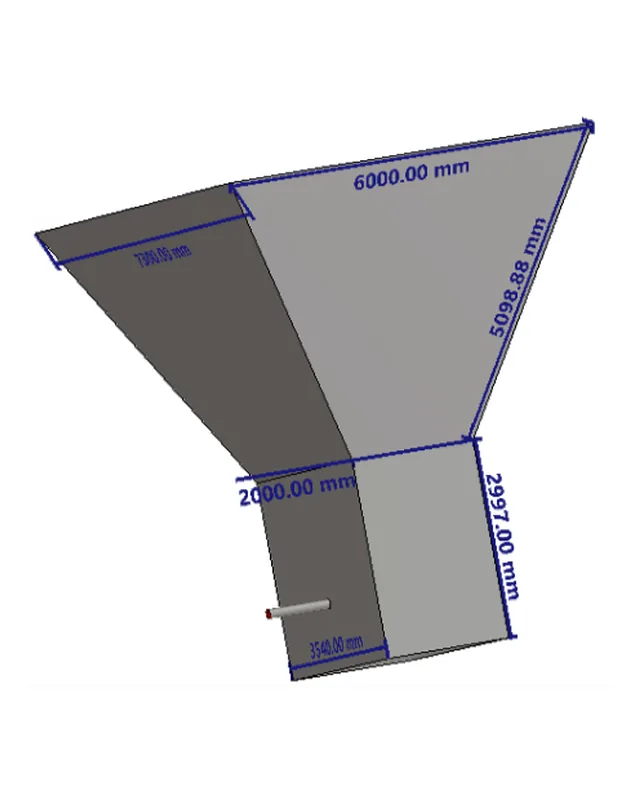
Image: The RHINO horn antenna.
Weak gravitational lensing
I formulate weak lensing as a stochastic field theory, connecting the paths of light through cosmic structure to observable lensing statistics.
-
Statistical field theory for weak gravitational lensing
Lensing statistics from stochastic light propagation.
-
sft-wick
Feynman-diagram expansion and evaluation in stochastic field theories.
-
A statistical field theory for weak gravitational lensing
JBCA research talk, September 2026.
Image: Simulated weak-lensing convergence.
Astrophysical processes
I model radiation from interstellar matter, from the rotational dynamics of nanograins and anomalous microwave emission to synchrotron radiation.
-
SpyDust
Modelling spinning dust radiation from interstellar nanograins.
-
Synchrotron emission modelling
Physical models of synchrotron radiation.
In preparation
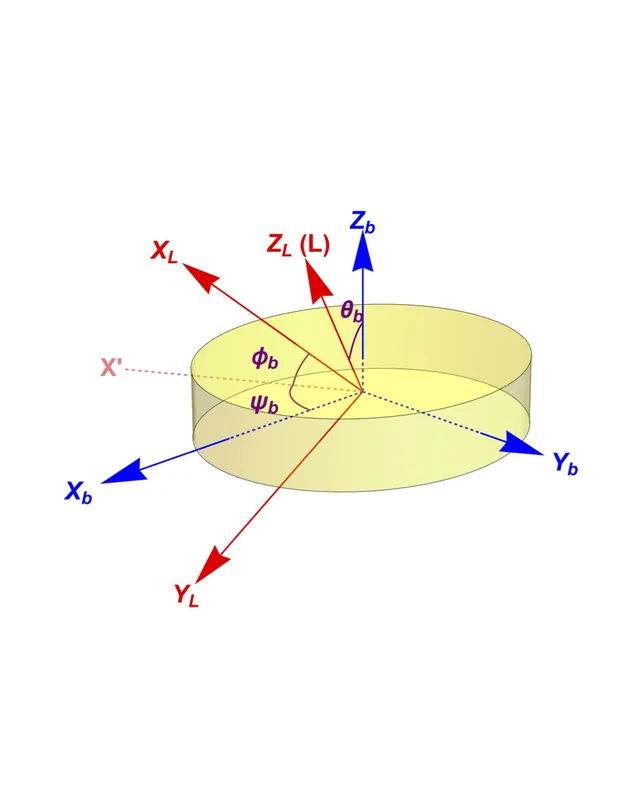
Image: The geometry of a rotating grain.
Statistical and AI methods
I develop tools for Bayesian inference, fast emulation and AI-assisted scientific analysis, with applications across my research.
-
bayesmith
Structured Bayesian models and inspectable inference procedures.
-
rheplicant-agent
An AI-assisted analysis layer for rheplicant.
In development -
MomentEmu
Fast polynomial emulation of smooth mappings and cosmological statistics.
-
sft-wick
Feynman-diagram expansion and evaluation in stochastic field theories.
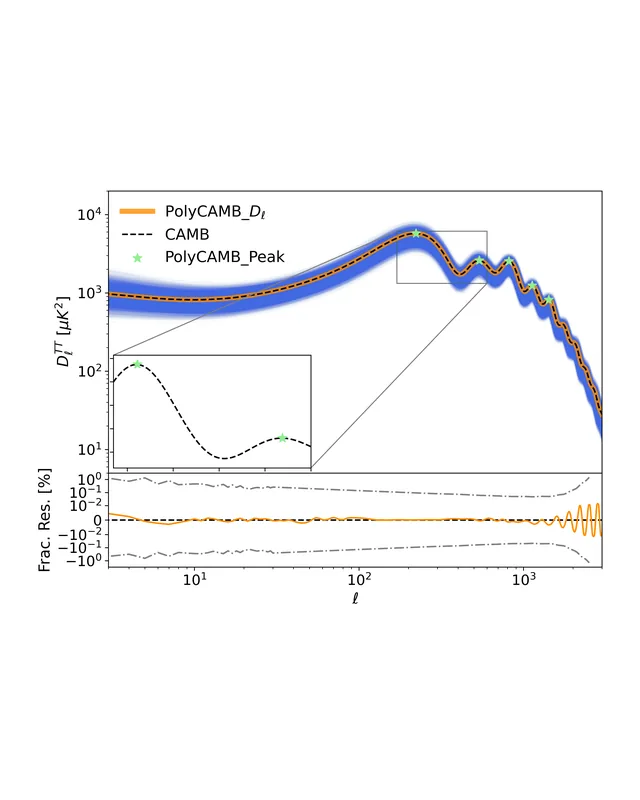
Image: A polynomial emulator of cosmological spectra.
Modelling across scales connects astrophysical processes and statistical methods.